Micromeal
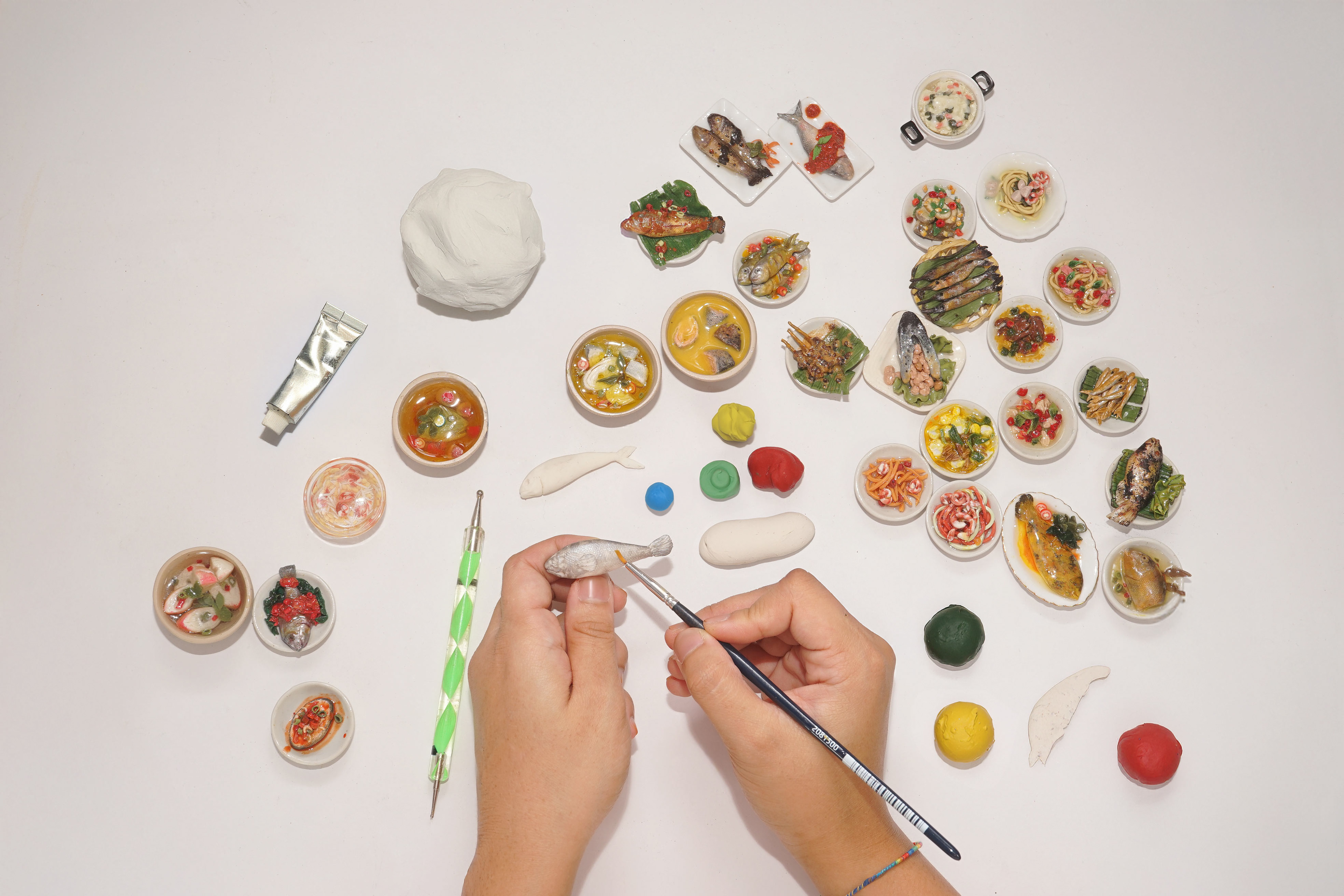
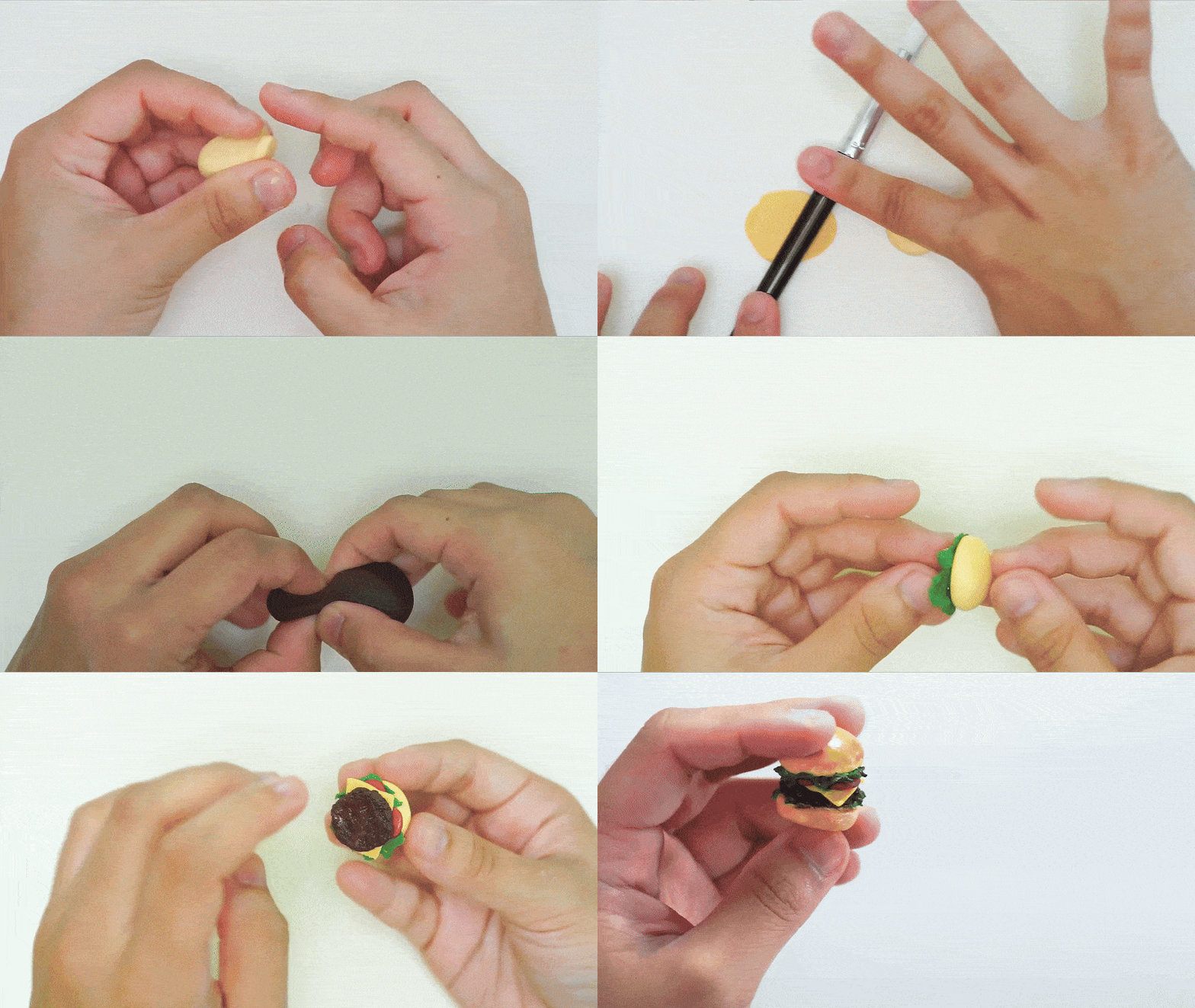
The process began with extensive visual research and material testing to determine how air-dry clay could best translate food textures into a tactile, illustrative medium. Instead of relying on photography, the decision to use clay was driven by the desire to create a more expressive and crafted representation of food. Reference images of real ingredients were studied closely to understand proportions, surface details, and color variations, ensuring that the final pieces would feel recognizable while still retaining an illustrative character.
Colour development was a critical early step. Air-dry clay was mixed manually using primary colors to achieve tones that matched the natural appearance of bread, vegetables, and toppings. This mixing process required careful calibration, as clay lightens slightly as it dries. Multiple test swatches were created and left to dry before final colors were approved, allowing for consistency across all elements and avoiding unexpected shifts in hue.
Once the base colors were prepared, the sculpting phase focused on building form and texture. Ingredients were shaped by hand and refined using everyday tools such as aluminum foil, toothbrushes, blades, and dental floss to mimic natural irregularities. Bread surfaces were pressed and scored to suggest crust and crumb, while vegetables were layered and indented to give depth. This hands-on approach allowed for subtle imperfections that enhance realism and visual warmth.
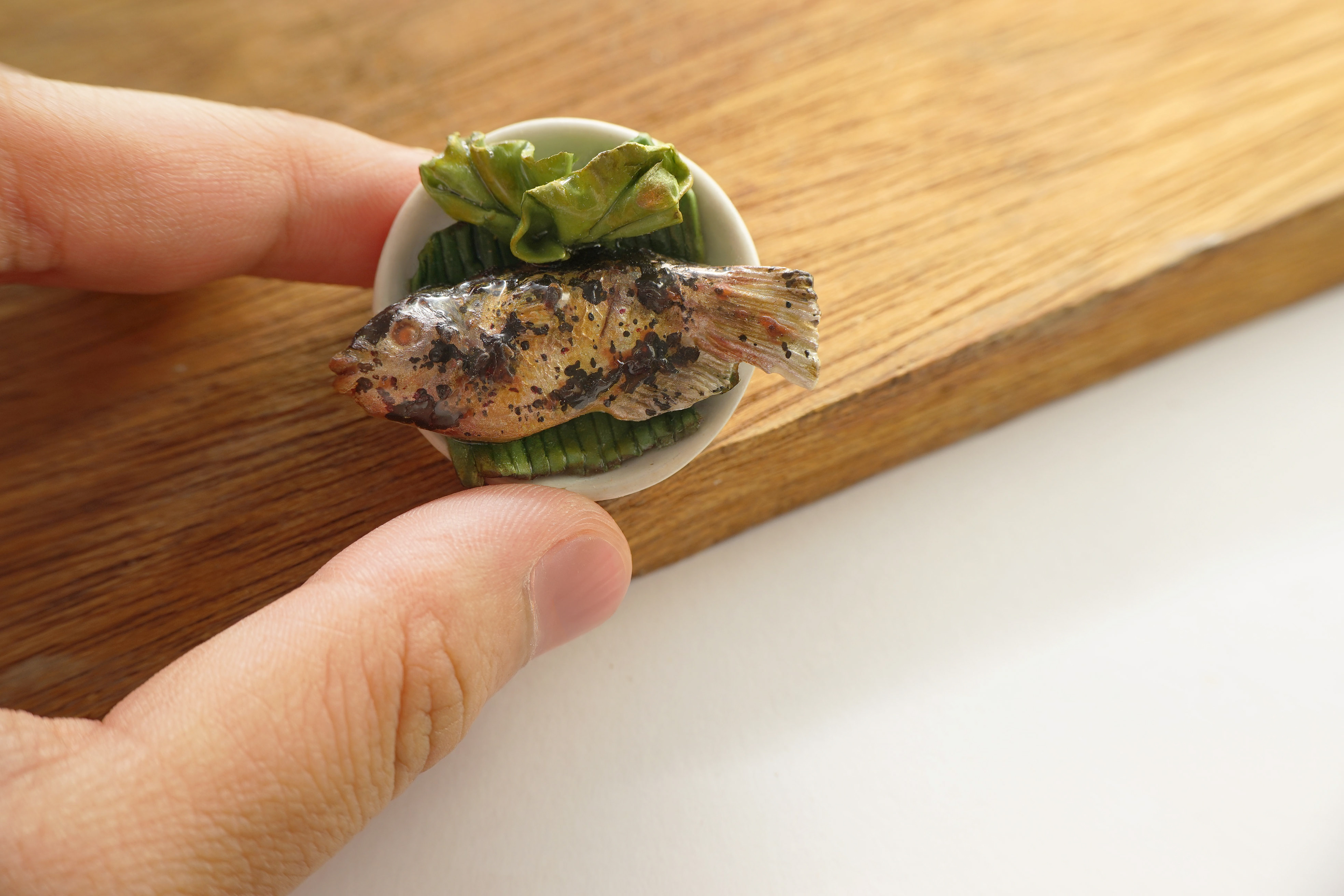
The final stage involved detailing and finishing. After the clay had fully dried, acrylic paint and soft pastel powders were applied to add shadows, highlights, and cooking effects such as roasting or freshness. Select elements were glazed with resin to introduce a slight sheen, simulating moisture and richness. The completed clay pieces were then photographed and composed digitally, blending physical craftsmanship with digital layout to create visuals that feel both tangible and contemporary.